
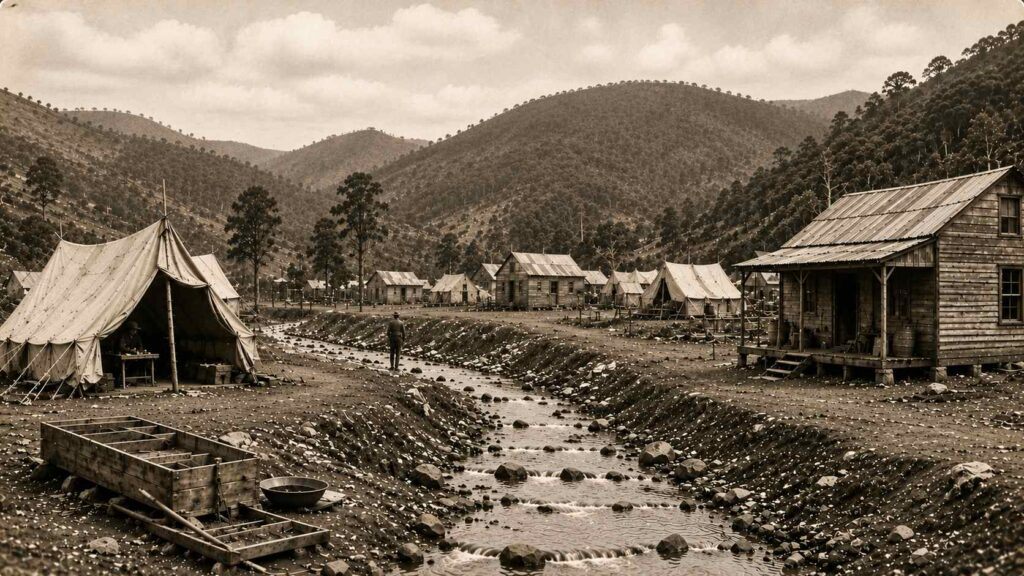
By 1860 the goldfields began to fade and the excitement that had swept through Golden Bay only a few years earlier was beginning to change.
The Aorere Valley had attracted prospectors, merchants and adventurers hoping to make their fortune. Collingwood had grown rapidly, mining camps had appeared throughout the valleys, and gold discoveries had brought national attention to this once-quiet corner of New Zealand.
But gold rushes rarely last forever.
As the easiest deposits became harder to find and miners searched for better opportunities elsewhere, the goldfields began to fade from the frantic activity that had defined the previous few years.
Golden Bay’s gold story, however, was far from being finished with.
Why The Goldfields Began To Fade
The early Aorere miners were primarily chasing alluvial gold, gold that had been naturally eroded from surrounding rock and deposited amongst river gravels over thousands or even millions of years.
For prospectors, these deposits could be relatively straightforward to work.
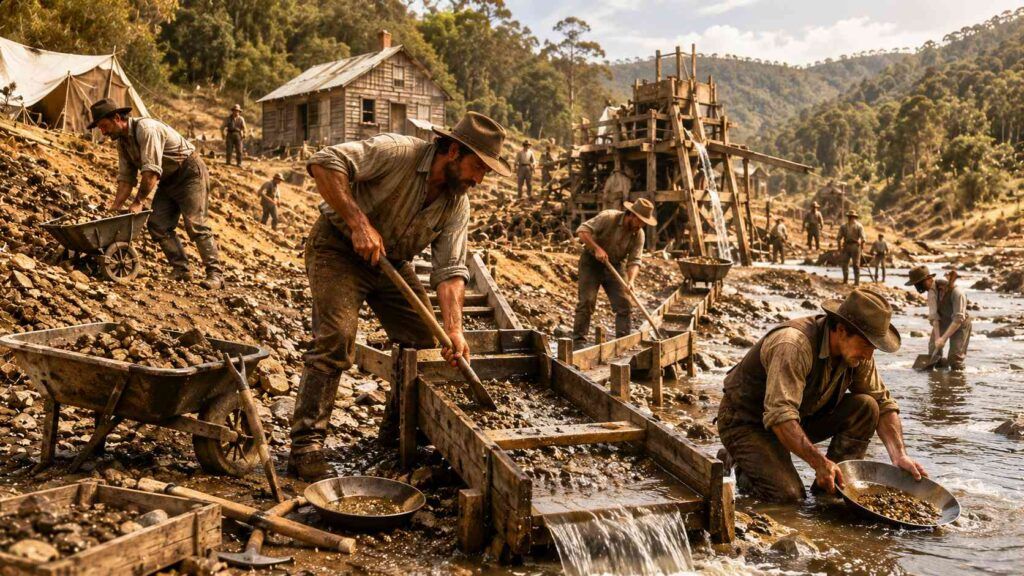
A miner could dig gravel from a promising location and process it using a gold pan, cradle or sluice box.
If the ground was rich enough, a good day’s work could produce an exciting return.
The problem was that everyone naturally targeted the most accessible deposits first.
As hundreds of miners worked the same rivers and tributaries, productive areas were gradually exhausted.
By around 1860, many prospectors were discovering that earning a living from the goldfields required considerably more effort than it had during the early rush.
Several Factors Why The Goldfields Began To Fade:
- Easily accessible gold deposits had already been heavily worked.
- Miners were forced to process increasing amounts of gravel.
- New discoveries became less frequent.
- Remote claims were harder and more expensive to supply.
- Some miners simply became discouraged and left.
- Rumours of new goldfields elsewhere constantly attracted adventurous prospectors.
The gold hadn’t necessarily disappeared.
The easy gold was becoming harder to find.
Remaining History: In many places that were worked, the remains of mullock piles remain and can be visited in person.
From Gold Fever To Hard Work
During the height of the rush, stories of successful claims could send miners racing towards a newly discovered creek.
By 1860, reality was setting in.
Finding worthwhile gold required more organised mining techniques. Water races, larger sluices and other equipment allowed miners to process greater quantities of gravel, but these methods also required more time, labour and investment.
The lone prospector with nothing more than a shovel and gold pan was increasingly at a disadvantage.
Some miners continued pushing deeper into the Aorere district, exploring tributaries and previously overlooked ground.
Others decided the opportunity simply wasn’t worth the effort.
Mining camps that had once been filled with activity gradually became quieter as prospectors packed their belongings and moved on.
What Happened To Collingwood?
Collingwood had grown rapidly because of the goldfield.
Miners needed food, accommodation, equipment, clothing, transport and entertainment. Businesses had sprung up to meet that demand, and shipping connected the settlement with Nelson and beyond.
As miners began leaving, the local economy inevitably felt the effects.
But Collingwood didn’t disappear.
Unlike some gold-rush settlements that became abandoned ghost towns, Collingwood had access to much more than gold.
Golden Bay contained farmland, timber, coal, limestone and other natural resources that could support permanent communities and industries.
Some people who had originally arrived because of gold also chose to remain in the district.
The rush had brought them here.
Golden Bay gave them reasons to stay.
A Bigger Gold Rush Was Coming
Then came an event that would dramatically change the direction of New Zealand’s gold-mining population.
In 1861, Gabriel Read discovered payable gold at Gabriel’s Gully in Otago.
The resulting rush became vastly larger than the earlier Aorere discoveries.
For miners accustomed to following rumours of richer ground, the decision was obvious.
Many headed south.
Thousands eventually poured into Otago, and Golden Bay’s pioneering gold rush became overshadowed by the enormous goldfields developing elsewhere in the South Island.
But the Aorere had already earned its place in New Zealand’s gold history.
The Goldfields Began To Fade But Never Truly Died
The end of the rush wasn’t the end of gold mining in Golden Bay.
This distinction is important.
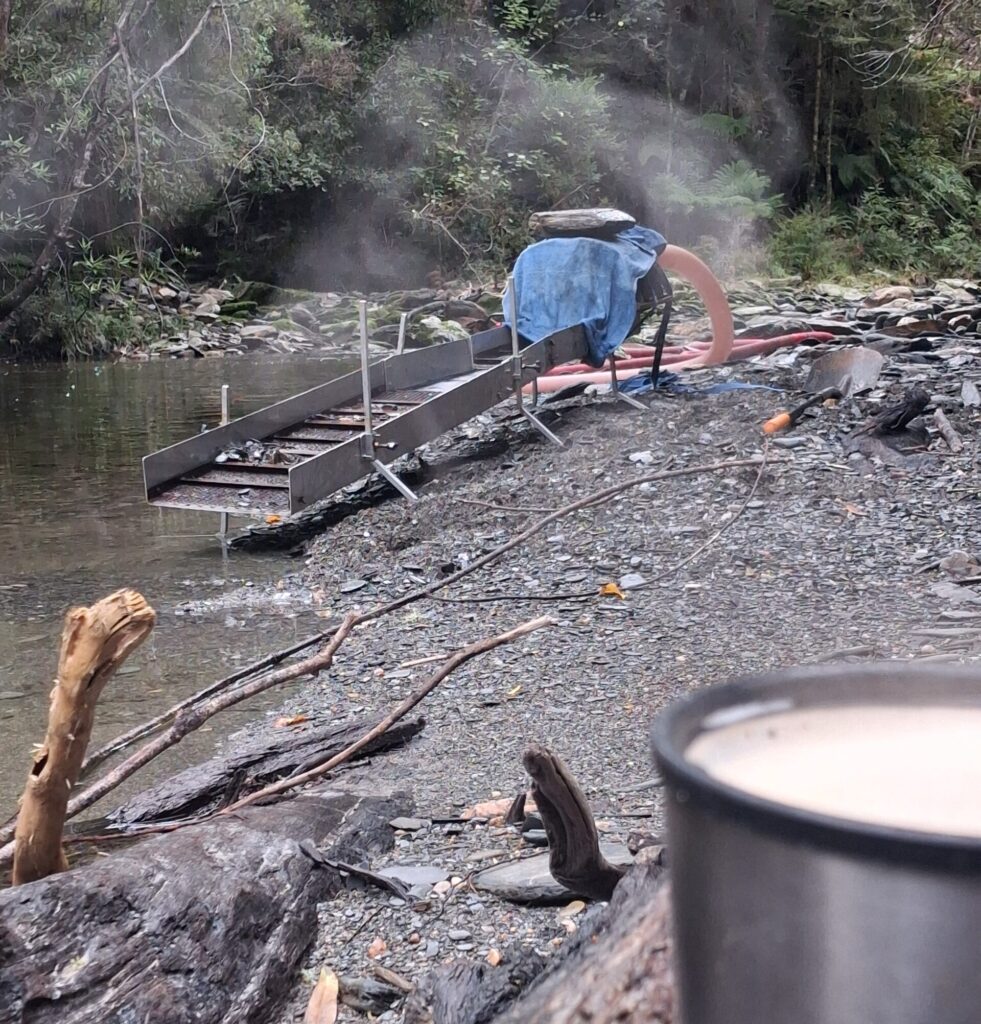
Prospectors continued searching the Aorere Valley and surrounding districts for decades. New techniques allowed miners to revisit areas where earlier prospectors couldn’t work efficiently, while companies later investigated deeper deposits and quartz reefs.
Gold would continue drawing people back to Golden Bay again and again.
What disappeared around 1860 was the gold fever, that extraordinary moment when hundreds of people believed they might walk into the valley and emerge with a fortune.
The tents slowly disappeared.
The crowded workings became quieter.
Collingwood settled into a different future.
Yet beneath the gravel, amongst old workings and along the rivers of the Aorere, traces of that remarkable era remain.
The goldfields begin to fade, but Golden Bay’s relationship with gold was only entering its next chapter.