
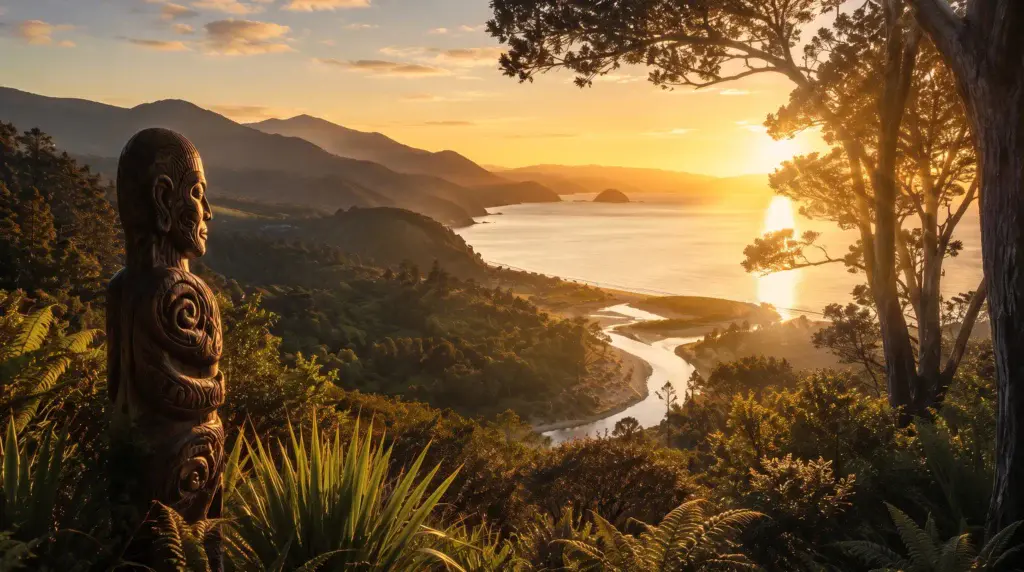
When most people think of Golden Bay, they picture sparkling rivers, rugged bush, and stories of gold rushes that shaped entire towns. But long before the first European explorer ever arrived, and long before gold became part of our local identity, Golden Bay (Mohua) was already home to a rich, thriving culture with a deep connection to the land.
This is the part of Golden Bay’s story that often gets overlooked, yet it lays the foundation for everything that came after… including the gold discoveries that would eventually put this place on the map.
Let’s step back into the pre-European era and explore what Golden Bay was like before the miners arrived.
Maori Settlement in Mohua
Golden Bay was originally known as Mohua, and it was settled by several iwi over the centuries, including:
- Ngāti Tūmatakōkiri
- Ngāti Apa
- Ngāti Rārua
- Ngāti Tama
- Te Ātiawa
For these iwi, Mohua was far more than just a place to live, it was a food basket, a travel route, and a gathering place filled with resources.
They didn’t search for gold, but they valued something far more important at the time: pounamu, fertile land, forests, and abundant waterways.
The coastline, rivers, valleys, and forests offered everything needed for life:
- Rich fishing grounds
- Birdlife for seasonal harvest
- Forests full of timber
- Rivers that are ideal for travel
- Stone and minerals for tools
- Safe harbours and defensible pā sites
It was a region of incredible natural wealth long before gold was ever a topic.
Mohua A Strategic Gateway Between Regions
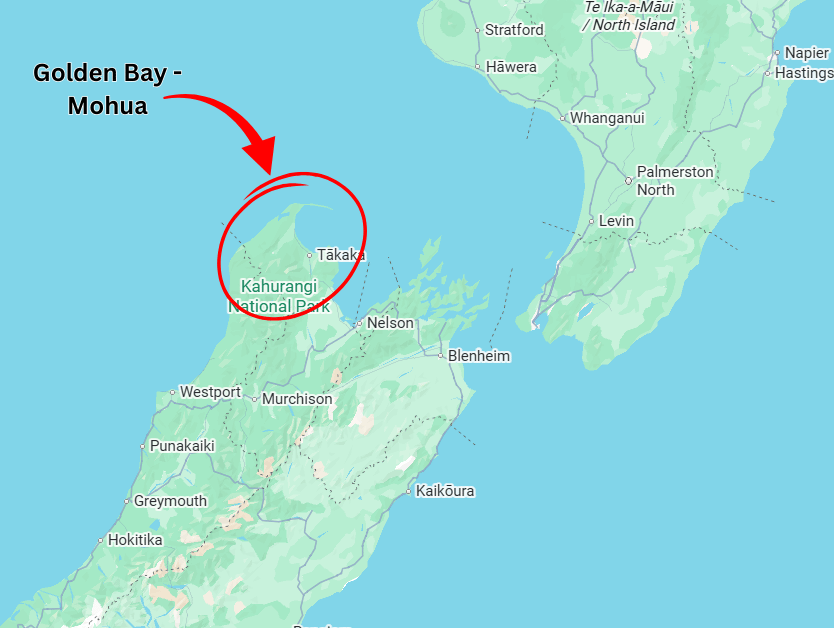
Golden Bay wasn’t isolated. Instead, it served as an important hub within Te Waipounamu (the South Island). Why was Mohua so important?
Because it connected everything:
- The Tasman coastline
- The West Coast pounamu routes
- The inland passes
- The Nelson/Tasman fertile fishing grounds
This made Golden Bay a natural meeting point for trade and seasonal movement.
People travelled through the region to access pounamu resources further south, especially through the Heaphy and Gouland Downs routes, meaning Golden Bay played a surprisingly large role in South Island trade networks.
Natural Features in Golden Bay That Shaped Early Life
Before the gold, before the roads, before Collingwood, the landscape itself dictated how people lived.
Key features of ancient Golden Bay included:
- 🌊 The Aorere River A major transport route and food source.
- 🌄The valleys and inland passes are used for travel, seasonal movement, and hunting.
- 🏞 Dense native forests are Home to birds, timber, and essential materials.
- 🏖 Coastal settlements and harbours. Perfect for fishing, gathering, and safe navigation.
This untouched environment is the same one early gold miners later walked into — and many of those mining trails actually followed the old Māori routes.
Early Use Of Minerals (But not gold)
While Māori did not mine gold in Golden Bay, they worked with a range of important natural materials, including:
- Argillite and chert for tools
- Pounamu from nearby regions
- Ochre and natural pigments
- Timber, harakeke, and other resources
Gold, at the time, simply held no cultural or practical value, but the rivers that held it were still used daily.
Ironically, rivers like the Aorere and Slate that Māori used for food and travel later became the centre of New Zealand’s first South Island gold rush.
A Deep Spiritual Relationship With The Land
One of the most powerful and often unspoken parts of Golden Bay’s pre-European story is the spiritual connection to place.
To the people of Mohua, the land was alive.
- Mountains had stories
- Rivers had whakapapa
- Forests were guardians
- Harbours held ancestral meaning
This relationship shaped how the land was used, protected, and respected. It’s a mindset that still influences Golden Bay today, especially with locals who value sustainability, conservation, and a quieter, nature-focused way of living.
Setting The Stage For Gold Discoveries
By the time Europeans arrived, Golden Bay was already a well-established and meaningful region, rich in resources, culture, and natural beauty.
So when gold was eventually discovered in the 1850s, these early mining parties were walking into a landscape shaped by hundreds of years of Māori occupation.
Many of the tracks miners followed were ancient trails. Many of the settlements they passed were built long before they arrived. And many of the rivers they dug into had already supported generations of life.
Understanding this pre-European era isn’t just history, it’s context.
It’s the beginning of Golden Bay’s gold story.
Summary and Final Thoughts: Golden Bay Before Gold
Golden Bay’s gold history didn’t begin with miners and gold pans, it began with the land itself and the people who first called it home.
Their knowledge of the environment, their routes through the mountains and valleys, and their deep relationship with Mohua all shaped the region long before prospectors showed up.
And when you explore Golden Bay today, whether you’re panning in the rivers, hiking old trails, or crafting gold from local nuggets, you’re walking in the footsteps of the people who lived here centuries ago.